


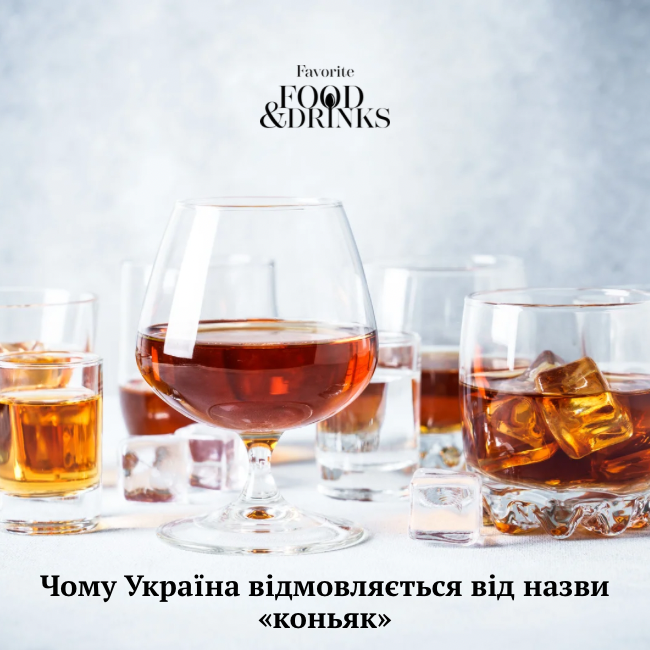
The name "cognac" is being cancelled in Ukraine: what will change from 2026 and what threatens producers
In December 2025, a 10-year transition period will end, during which Ukrainian producers had to stop using the names "cognac", "champagne", "calvados", etc. and switch to "brandy" or another non-European name. This was reported by the Ukrainian media.
This is a requirement of the EU-Ukraine Association Agreement of 27 June 2014 (note: the EU-Ukraine Association Agreement is not yet in force). paragraph 3, Article 208 "Provisional Measures" of the Agreement) and part of the harmonisation of legislation with European standards.
Starting from 1 January 2026, the word "cognac" will become a protected geographical indication that can be used exclusively by producers from the French Cognac region.
For manufacturers, this means rebranding, administrative risks for violations and the need for inventory planning and labelling.
Why Ukraine is abandoning the name "cognac", in simple terms
"Cognac", like "Champagne", "Calvados" or "Port", are legally protected names. They indicate not just the type of drink, but a specific territory, technology and standards approved by the EU. Ukrainian producers cannot fulfil the geographical requirement because they do not produce the drink in France.
Specifically, the names "Cognac", "Champagne", "Port" are protected geographical indications and cannot be used by Ukrainian producers for products made outside the relevant geographical areas and without meeting certain standards. The Ukrainian equivalent for "cognac" is "brandy" or another alternative name. It should be the official name for national production.
The reasons for this decision are part of European integration, access to EU markets, consumer protection, and streamlining the industry according to European standards
Refusal to use other people's geographical names is a prerequisite for opening up and facilitating exports. The EU market has a guarantee that Ukrainian names comply with international standards. Compliance with European standards will facilitate trade with the EU and increase the chances of certification and access to premium market segments.
Consumers have the right to know what they are buying. When the label says "cognac", buyers all over the world expect a French product under French production rules. After the changes, Ukrainian producers must indicate the honest and accurate category of the drink.
The Law on Geographical Indications of Alcoholic Beverages introduces clear categories of alcoholic beverages, classification and labelling requirements. This prevents chaotic or misleading labelling. A clear classification and definition of "official names" removes the subject of "marketing manipulation" and creates equal rules for all players.
It also means legal protection. When a country protects other people's GIs, it gains a legal "credit history" for its own GIs. This will allow Ukrainian regional products to gain international protection in the future.
What happens if manufacturers fail to meet the deadline
Sanctions will be applied from 2026:
- fines - from 5 to 15 minimum wages for using a protected name (as of 1 January 2026, it will be between UAH 43,235 and 129,705 and will not depend on the size of the batch or the number of bottles);
- a ban on the sale of batches with incorrect labels;
- Risks of financial costs for compulsory re-labelling;
- loss of reputation and problems with exports.
Beverages produced and labelled before 1 January 2026 may be sold "until stocks are exhausted".
Practical steps for producers (recommendations)
- Check the shelf life of stock and plan sales/re-labelling.
- Prepare the rebranding: labels, packaging, promotional materials - adapt the message to the new name (brandy, wine-brandy, etc.) as much as possible.
- Contact a lawyer/patent attorney to register a new name or apply for Ukrainian GI (to protect your own unique name).
- Communication plan: explain to consumers that only the name is changing, not the quality (if the recipe and standards are maintained).
What will change for consumers
- Ukrainian cognac will no longer be a name, but the drink will not disappear.
- Brandy, or other Ukrainian names that producers can register, will appear on the shelves.
- Labelling will become more transparent: the buyer will know where the product comes from and what production standards it has.
Why this is important right now
Ukraine is adopting European rules of the game: transparency, honesty of labelling, legal protection of names and competitiveness in the international market. The end of the transition period is the final point of a ten-year process for which the industry has been preparing in advance. This is not just a change of words on the label, but a step towards a civilised market and integration into the common European production and quality control system.
Legislative framework and sources, regulations:
The Verkhovna Rada adopted the Law of Ukraine "On Geographical Indications of Alcoholic Beverages" (No. 2800-IX), which harmonises Ukrainian rules with European law in terms of categorisation, labelling and protection of geographical indications (GI) for alcoholic beverages.
Ukraine is implementing the provisions of Regulation (EU) No 2019/787 on the definition, description, presentation and labelling of alcoholic beverages. The document clearly defines that "Cognac", "Champagne", etc. are geographical indications in the EU. This standard has become a benchmark for Ukrainian law.
This is part of the obligations under the EU-Ukraine Association Agreement: it provides for the protection of geographical indications and transitional periods for partner countries. The agreement defines a period during which countries have to gradually abandon the use of protected European names for products that do not meet geographical requirements.
- The Law of Ukraine "On Geographical Indications of Alcoholic Beverages" No. 2800-IX of 01.12.2022.
- Regulation (EU) No. 2019/787 (defines official names and rules for the labelling of alcoholic beverages (EUR-Lex).
- Agreement "On Association between Ukraine, on the one hand, and the European Union, the European Atomic Energy Community and their Member States, on the other hand" of 27.06.2014
- Customs Code of Ukraine (Section XIV)
- Official communications of the State Customs Service and the Ministry of Agrarian Policy on GI protection and import/ labelling requirements (information messages for importers).