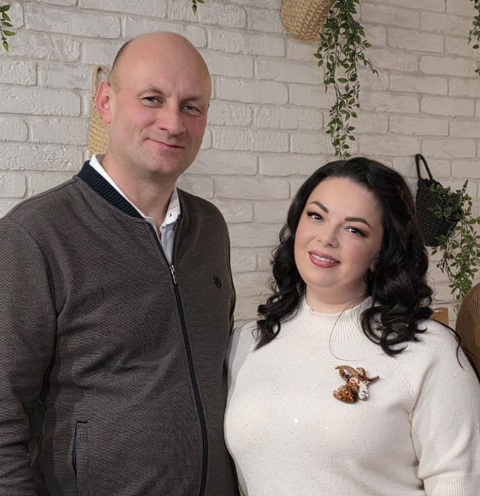
Vita Tsvyk, deputy head of Tetiana 2011, the owner of Zinka, talks about the challenges facing Ukrainian farmers and cheese makers and their plans for the future.
- Zinka was launched 10 years ago. Do you remember the main challenges at the time?
- It was 2015, 17 August, as I remember it now. That was when the first animals arrived from France - 330 heads of purebred Alpine and Zaanen goats. At that time, we had no plans for our own processing: we wanted to have a full production cycle. The Tatiana 2011 farm has been in existence since 2011, and at first the main focus was on crop production. Four years later, livestock farming was added.
One of the biggest challenges at the time was the lack of a culture of consumption of any goat's milk products. There is a stereotype that goat's milk has an off-flavour and aftertaste. But this is a "point" from my childhood, when they tried to treat us in the village with this milk, because it really has healing properties. In reality, it all depends on the conditions of the animals and the approach of the owners.
We negotiated with Yagotynske to process milk at their plant. They already had everything in place, both logistics and processing, but it didn't work out. So we decided that we would process it ourselves and started working on our product range.
In 2016, also in August, we entered the first chains - NOVUS and Auchan - and small shops.
A couple of years later, Auchan and other chains started to develop farm products. It was quite difficult to enter the chains, but they heard us, and at the same time as we were developing, they also started developing farm products. And now Auchan is already launching a project with local Ukrainian products that will be supplied to Poland, and Zinka is also involved.
- What products did you start with?
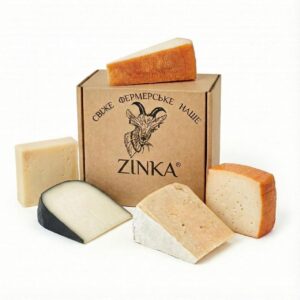
- First, we launched a line of milk, yoghurt and semi-hard cheeses. The milk was available in three levels of fat content. Later we added yoghurts - without and with fillers, kefir, sour cream. Then came cheeses with three and six months of aging.
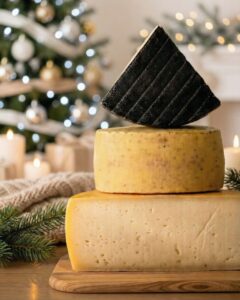
Now we have cheeses that have been aged for more than 30 months - they have a texture and taste reminiscent of Parmesan, with calcium crystals that crunch nicely and reveal the flavour vividly. Gourmets are well aware of the quality of these cheeses.
At the same time, the goat is a seasonal animal. During certain periods, goats do not produce milk, so fresh cheeses, semi-hard cheeses and cheeses with white mould temporarily disappear from the range. During this time, we work with a reduced line.
But when you cooperate with chains, you can't just go off the shelf - it's very difficult to come back. That's why we are reducing the volume of cheese production, but keeping milk and dairy products.
Our customers include many children with lactose allergy who depend on our dairy products. As producers, we have no right to leave them without a product.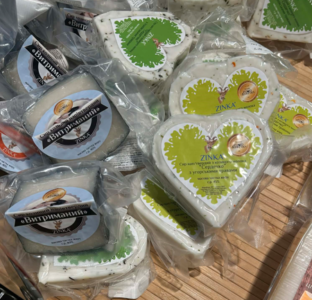
- Did you have any obstacles to keep the quality of the product consistent?
- We always maintain stable quality. It is influenced by many factors: first of all, the genetics of the animals - all of them are genetically pure. Also, the conditions of detention: the animals are kept in pens, but have enough space to move around.
The feeding is hourly and balanced. We control everything that the animals eat: hay, straw, grain pellets are produced by ourselves, and we buy only trace elements.
Milking is automatic - the milk goes straight into a closed system without contact with air or humans. Only our milk tanker drives around the territory, and the milk is pumped directly from the system to the truck. There are three interconnected lines of equipment at the processing plant.
We also have our own logistics: we deliver in the Kyiv region using our own vehicles equipped with refrigerators.
This is unique, because few people combine a farm and a processing plant - it is difficult both financially and in terms of management.
- A year after the start, you have already entered your first retail outlet. What was the hardest part of this process and what difficulties do you face now?
- When we started, there was only Polish goat's milk on the shelves with a shelf life of 90 days. Our products had a very short shelf life: 10 days in winter and 7 days in summer. In fact, chains had five days before markdowns or write-offs. It was very difficult.
Few people believed that Ukrainian goat milk would be sold. But we participated in all possible events where we could showcase the product. People started to try it, and that was the turning point.
We are now in a period when the number of conscious consumers is gradually increasing. In 2016, this was not yet a trend. As our owner joked, our fields saw a lot of goat milk, and the dogs ate a lot of goat cheese. But we have reached a level that today allows us to enter any chain.
We have found our customers - those who want us, look for us and order us.
In addition, at that time, not only we were developing, but also many other small individual farmers, such as Mukko. I always say that we are partners, colleagues who actively promote the culture of consumption of goat and sheep milk products.
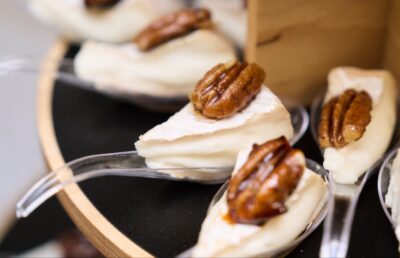
After all, we didn't have a culture of cheese consumption at all. Nowadays, young people are showing themselves more in combining cheese with various jams, honeys, nuts and so on. Previously, during the holidays, it was sausage and cheese slices.
Another challenge is that the market is overcrowded with European cheeses. This is a problem for all small producers. It is difficult for everyone to find a buyer, because the price of our cheeses is higher than European ones. It is clear that those who know what cheese is and what cheese product is will buy what they want. And those who don't try it will buy what is cheaper.
Ukrainian business is currently going through a difficult time both in terms of competition and staff shortages. That's why it's great when a Ukrainian producer, cheese maker, and livestock keeper unite and pursue the goal of keeping their customers with them.
- As a brand, you participate in tasting competitions both in Ukraine and abroad. What do you get out of it?
- First of all, it's about recognition. People want to try the product, and if they have tried it, they come back. Contests also make it easier to cooperate with chains: they are eager to pick up on the theme of awards and want to see these products on the shelves.
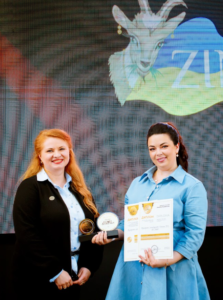
The last two years have brought us 10 awards, both for cheeses from our core range and for new products that we introduced last year. Thanks to competitions, we are known both in Ukraine and abroad, and we strive to develop the culture of cheese consumption in the country as much as possible.
- Do you communicate these awards with consumers?
- Why did we introduce these new products? Whatever the case, communication with the end consumer always brings clarity and understanding of what the buyer wants.
4 years ago, our farm was on the verge of occupation, and of course, there was no logistics. After the de-occupation, the chains did not know what to do, whether they needed this particular product, which was much more expensive - there was no time for analytics, surveys, or anything else. Then we opened four of our own stores - three in Brovary and one in Yahotyn. And it worked very well.
I always try to be present at events where we present our products and where there are people who actually taste and buy them. You listen, analyse and plan.
I had a question: do you have truffle cheese? No, we don't. And with blue mould? No, we don't. Do you have any spicy balls? No.
We have 35 types of cheese, but there is no such thing. So I came back, talked to the management, and said: you know, just like in fashion and in the cheese industry, trends and the foreign market dictate something to us. Let's make this "something".
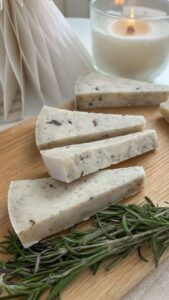
Of course, this is additional work, but at the World Cheese Awards 2025 in Switzerland, our Gouda with Truffle cheese was officially recognised as the best Ukrainian cheese. At the international competition Favorite Food&Drinks, Gouda and Iskristy cheeses won the Grand Prix.
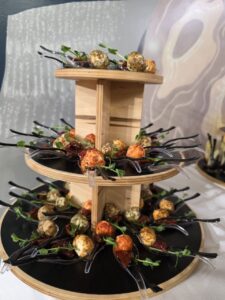
At the national ProCheese 2.0 competition, Goat Stuff, also known as cheese balls in spicy oil, won bronze.
We want the world to know Ukraine through peace, quality and real talent.
And these tastes are part of our history, which we create together.
- Did you get any specific results after these global awards? Any new partnerships or export opportunities?
- We have been offered exports for a long time, but we don't have that much milk at the moment. When you export, you have to have 40 tonnes of milk per day, and you have to process it to meet the volumes, needs, orders and so on. Why 40 tonnes? Because this is our goal. We already have a 40-tonne processing plant in operation. But we are still working on obtaining a European certificate, although in general we give more preference to the countries of the East. Because the European market has enough cheese of its own.
After the competitions, the chains respond well to the results. Consumers also follow up and ask: where is the cheese that won gold? We have a gift box where we put the winning cheeses from all the competitions. It works well and sells well.
- What are your plans for the future?
- We have opened another area, processing of fruits, berries and vegetables. We have a range of sun-dried tomatoes that go well with our cheeses, and juices - apple, apple-carrot, beetroot, apple-beetroot, and tomato. These products are sold under the new brand name TSVVITFEMELI. I will tell you about the history of the name when we are ready.
It is important to develop the culture of cheese consumption through combinations - with jams, tomatoes, sauces, goat meat products. So we have a lot of plans.